Fear of Judgement on Social Media: A Guide for OTs
Oct 22, 2026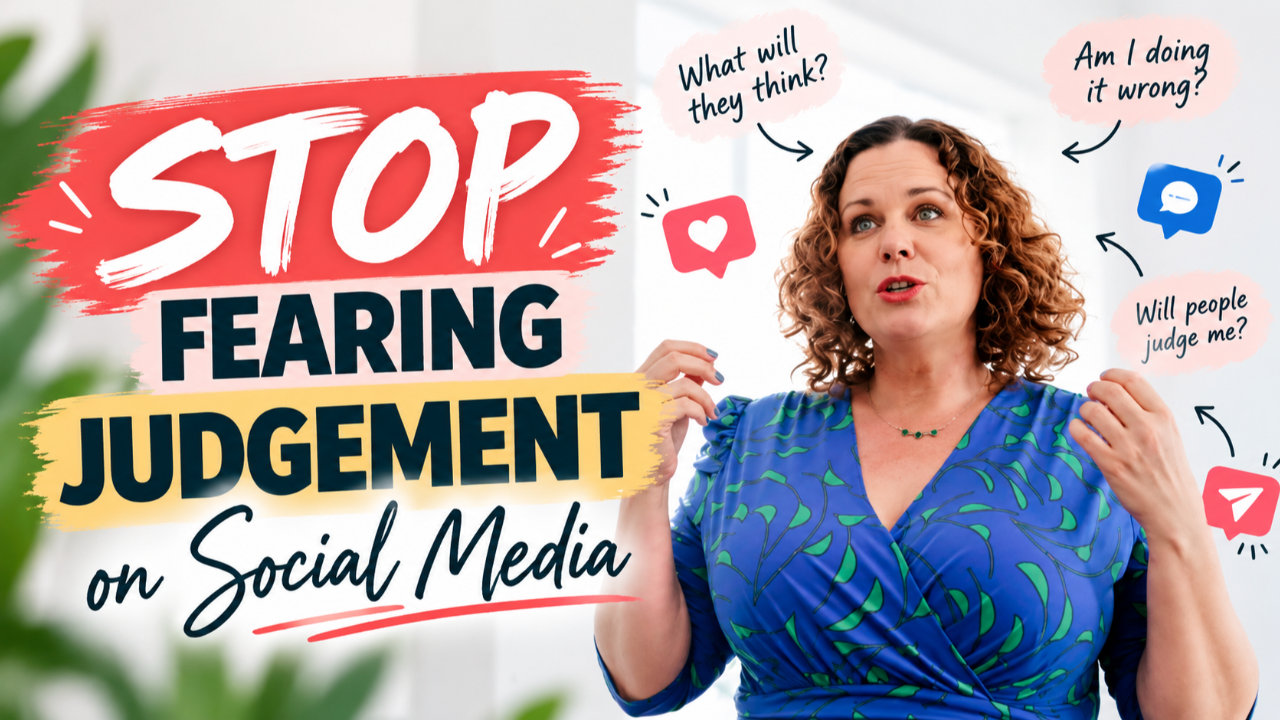
How to Stop Fearing Judgement on Social Media as an Occupational Therapist
Have you ever written a social media post, read it back, decided it sounded too bold, changed half of it, and then left it sitting in your drafts?
Perhaps you wanted to share an opinion, talk about something you believe in, or explain a different approach to helping your clients. But then the questions started.
What will other Occupational Therapists think? What if a former colleague sees this? What if someone disagrees with me? What if people think I'm trying to sell something?
So you soften your message. You remove the interesting part. You make it sound a little more professional, a little less personal and a lot less like you.
Eventually, you publish something that feels safe. Or you don't publish anything at all.
If this sounds familiar, you are not alone.
Fear of judgement on social media is one of the barriers that can stop Occupational Therapists from building a visible, successful business. And often, the problem isn't that you don't know what to say. It's that you are worried about what might happen when you say it.
The good news is that you don't have to wait until you feel completely confident to start showing up differently. You can learn to work with that fear, communicate with greater authenticity and build confidence one step at a time.
Why is social media so difficult for Occupational Therapists?
As an Occupational Therapist, you are trained to think carefully, follow professional standards and consider the potential consequences of your decisions.
These are important qualities. Your clients deserve thoughtful, ethical and responsible care.
However, when you start marketing your own business, that same careful thinking can sometimes turn into constant self-monitoring.
You might find yourself asking:
-
Is this the right thing to say?
-
Could someone misunderstand my message?
-
Am I allowed to talk about this?
-
Will other professionals think I am doing something wrong?
-
What if someone challenges my knowledge or experience?
-
Will people think I'm being arrogant if I talk about my results?
Before long, creating one simple Instagram post feels like a major decision.
You spend so much time thinking about how other people might react that you lose touch with what you actually want to communicate.
There is an important distinction here. Professional boundaries, ethical obligations and relevant regulations matter. You should always understand and respect the standards that apply to your work.
But not every anxious thought is evidence that you are about to do something wrong.
Sometimes, you are dealing with a genuine professional consideration. Other times, you are imagining an audience of people who might criticise you, misunderstand you or decide they don't like you.
Learning to tell the difference can make marketing your Occupational Therapy business feel much more manageable.
The fear of rejection can keep your business small
Fear of judgement is rarely just about a social media post.
Underneath it, there may be a deeper worry about rejection, criticism or not belonging.
Perhaps you have experienced being dismissed in the past. Maybe you have had your ideas questioned, felt overlooked or learned that it was easier to keep your opinions to yourself.
Those experiences can influence how comfortable you feel about being visible today.
When you consider putting something personal or meaningful into the world, you might notice yourself becoming anxious, overthinking your words or wanting to retreat.
This reaction doesn't necessarily mean your idea is wrong. It may simply mean that being seen feels uncomfortable.
And when being seen feels uncomfortable, it is easy to choose the familiar option: stay quiet, keep your message general and avoid attracting attention.
The difficulty is that this can become a pattern.
You avoid posting because you fear criticism. Because you post less often, you have fewer opportunities to practise communicating confidently. You then feel even less confident about showing up.
Meanwhile, potential clients who might benefit from your work may never discover you.
You cannot build a visible business while constantly trying to make yourself invisible.
The answer isn't to force yourself to become fearless overnight. It is to develop the confidence and emotional resilience to keep moving, even when some uncertainty remains.
Stop trying to appeal to everyone
One of the biggest mistakes you can make with your OT business marketing is trying to write content that nobody could possibly disagree with.
You carefully choose your words, avoid expressing a clear opinion and make sure every post sounds acceptable to everyone.
But content that tries to appeal to everyone often struggles to connect deeply with anyone.
Your ideal clients need to understand what you believe, what you help them with and why your approach might be right for them.
That requires a degree of clarity and personality.
You do not need to share every personal detail or express every thought that crosses your mind. Authentic marketing is not about being unfiltered. It is about communicating honestly and consistently with the people you want to help.
For example, rather than writing a generic post about the importance of self-care, you might explain why you believe exhausted practitioners need more than another productivity checklist.
Instead of simply saying that you help people improve their daily routines, you could explain what makes your approach different and why that matters to the clients you support.
You can share your professional perspective while remaining respectful, evidence-informed where appropriate and within your scope of practice.
The goal is not to provoke people for the sake of attention. It is to help the right people understand what you stand for.
Some people may disagree with you. Others may not connect with your approach.
That does not automatically mean you have done something wrong.
Your job is not to be liked by everyone. Your job is to communicate clearly enough that the right people can recognise the value of your work.
What is the business idea you are afraid to share?
There is often a difference between the business you tell people you want and the business you secretly dream about creating.
Perhaps you want to develop a specialist service that combines your clinical experience with another skill you have developed.
Maybe you are interested in a more holistic approach, want to support a particular group of people or have an idea for a programme that feels different from the services you currently offer.
You might even know exactly what you want to create, but keep finding reasons to delay it.
You tell yourself you need more training, a better website, another qualification or a more detailed plan before you can talk about it.
Sometimes those things are genuinely necessary. At other times, they become a convenient way to postpone the moment when other people can see what you are trying to build.
Ask yourself:
-
What do I really want to create in my business?
-
What am I interested in that I rarely talk about?
-
What would I explore if I felt less worried about other people's opinions?
-
Am I holding back because I need to address a genuine professional requirement, or because I am afraid of being judged?
-
What is one small step I could take to explore this idea responsibly?
You do not need to turn every idea into an offer. You do not need to announce a new direction before you are ready.
But you do need to give yourself permission to explore what you want, rather than automatically dismissing it because it feels different.
Your business should reflect your strengths, values and aspirations, not just what you believe other people will approve of.
Confidence is not just about changing your mindset
When you struggle with visibility, it is tempting to think you simply need to be more positive.
You might tell yourself to stop worrying, be confident and get on with it.
But if your body feels tense every time you press publish, repeating positive statements may not be enough to help you feel comfortable.
Fear can be experienced physically as well as mentally. You might notice tension in your shoulders, a tight feeling in your stomach, shallow breathing or an urge to close the app and do something else.
Rather than treating these feelings as a reason to stop, you can learn to pause and respond to them with a little more care.
The aim is not to ignore your feelings or force yourself through every uncomfortable situation. It is to create enough space to decide what you want to do next.
A simple grounding practice before you post
The next time you feel anxious about sharing something online, try this short exercise.
1. Pause before editing your message.
Give yourself a moment before immediately deleting the post or rewriting it to sound safer. You do not have to make a decision at the peak of your anxiety.
2. Notice what is happening in your body.
Are your shoulders tense? Is your breathing shallow? Do you feel a knot in your stomach? Simply notice what you are experiencing without criticising yourself for it.
3. Bring your attention back to the present.
Place both feet on the floor. Let your shoulders soften and take a few slow, comfortable breaths, allowing your exhale to be unhurried. Notice the support beneath you.
4. Respond to yourself with compassion.
Instead of telling yourself that you are being silly, try something more supportive:
I can feel nervous and still make a thoughtful decision. I am allowed to express my professional perspective. I can take this one step at a time.
5. Choose your next step deliberately.
Review your message against the relevant professional standards and your intended purpose. If it is appropriate to share, consider publishing it without making endless changes just to avoid the possibility of criticism.
If the content genuinely needs more thought, give it that attention. The difference is that you are making a considered choice rather than allowing fear alone to decide for you.
Practices such as grounding, slow breathing and compassionate self-reflection can help some people manage moments of stress. They are not a substitute for professional support when anxiety is persistent or significantly affecting your wellbeing.
Learn to feel safe being seen
Building confidence on social media is not a single decision. It is a process of learning that you can show up, express yourself and cope with the uncertainty that comes with being visible.
You may need to practise this in small ways.
Perhaps you start by sharing a professional insight that you would normally keep to yourself. Next, you record a short video explaining something you often discuss with clients. Later, you share a clearer opinion about a problem your ideal clients face.
Each time, you have an opportunity to learn.
You may discover that the reaction you feared never happens. You may receive an encouraging message from someone who found your content helpful. You may also encounter disagreement or criticism.
Not every response will be positive, and that is part of being visible in a public space.
The aim is to build enough resilience to respond appropriately without allowing every opinion to determine what you say next.
It can also help to have supportive people around you who understand the challenges of growing a business. Being able to talk honestly about your worries, share ideas and receive constructive feedback can make the process feel less isolating.
You do not have to figure everything out alone.
You can be professional and authentic at the same time
Some Occupational Therapists worry that showing more personality online will make them appear less professional.
They assume they must choose between being credible and being themselves.
But these things do not have to be in conflict.
You can be warm and professional. You can communicate clearly while showing your personality. You can share your values without making every post personal. You can explore new ideas while being transparent about your training, experience and professional boundaries.
Authenticity does not mean abandoning the standards that matter to you. It means finding a way to communicate within those standards without hiding everything that makes your approach distinctive.
Think about the conversations you have with the people you help. What questions do they ask? What misunderstandings do you regularly address? What do you wish more people understood about your work?
These are excellent starting points for useful, relevant social media content.
You do not need to manufacture a personality or copy another business owner's style. You need to make it easier for people to understand who you help, how you think and what working with you might be like.
The more clearly you communicate these things, the easier it becomes for the right people to decide whether your services are a good fit.
Your visibility is part of your service
If you are building an Occupational Therapy private practice or another OT-led business, marketing can sometimes feel like an activity that takes you away from the work you really want to do.
But consider what happens when you remain invisible.
People who need your services may not know you exist. Potential clients may not understand the options available to them. The people who would connect with your approach may never have the opportunity to explore it.
Sharing your expertise is one way of helping people make informed decisions about whether your services could be right for them.
You do not have to be on every platform. You do not need to post constantly or turn your entire life into content.
You do, however, need a way of communicating consistently with the people you want to reach.
Start with what feels manageable. Share useful insights, answer common questions, explain your approach and allow your audience to get to know the person behind the business.
Over time, this can help you build trust, strengthen your professional visibility and create more opportunities for meaningful connections with potential clients.
And as your confidence grows, you may find that marketing becomes less about proving yourself and more about communicating the value of what you do.
What would change if you stopped letting fear make the decisions?
Imagine what might become possible if you spent less time worrying about what former colleagues might think and more time connecting with the people you genuinely want to help.
What if you could talk about your services without feeling that you had to justify your ambition?
What if you could share your perspective without rewriting every sentence to make it acceptable to everyone?
What if you gave yourself permission to build a business that reflects your values, your skills and the life you actually want to live?
You would still need a clear strategy, sound business decisions and appropriate professional boundaries. Confidence alone will not build a sustainable business.
But strategy works better when you are willing to put it into action.
You can have the best offer, the clearest marketing plan and the most beautiful website, but if fear consistently stops you from communicating with potential clients, you are making it much harder for people to find you.
You do not have to become a completely different person to build a successful OT business. You can begin by allowing yourself to be seen a little more, one thoughtful decision at a time.
Your next step
Think of one thing you have been holding back from sharing online.
It might be a useful insight, an opinion about your area of expertise, a story about why you do the work you do or a service you have been nervous to promote.
Ask yourself whether there is a genuine professional reason not to share it. If there is, address that first. If the main barrier is fear of what other people might think, consider what a small, responsible step forward would look like.
You do not need everyone's approval before you can build a business you believe in.
You are allowed to be visible. You are allowed to have your own perspective. And you are allowed to build a business that feels like yours.
If you are ready to create an OT business with more confidence, flexibility and freedom, explore the resources and support available through OT Yourself to Freedom.
Stay connected with news and updates!
Join our mailing list to receive the latest news and updates from Beki.
We hate SPAM. We will never sell your information, for any reason.