What Do You Want to Be Known For as an Occupational Therapist?
Mar 12, 2026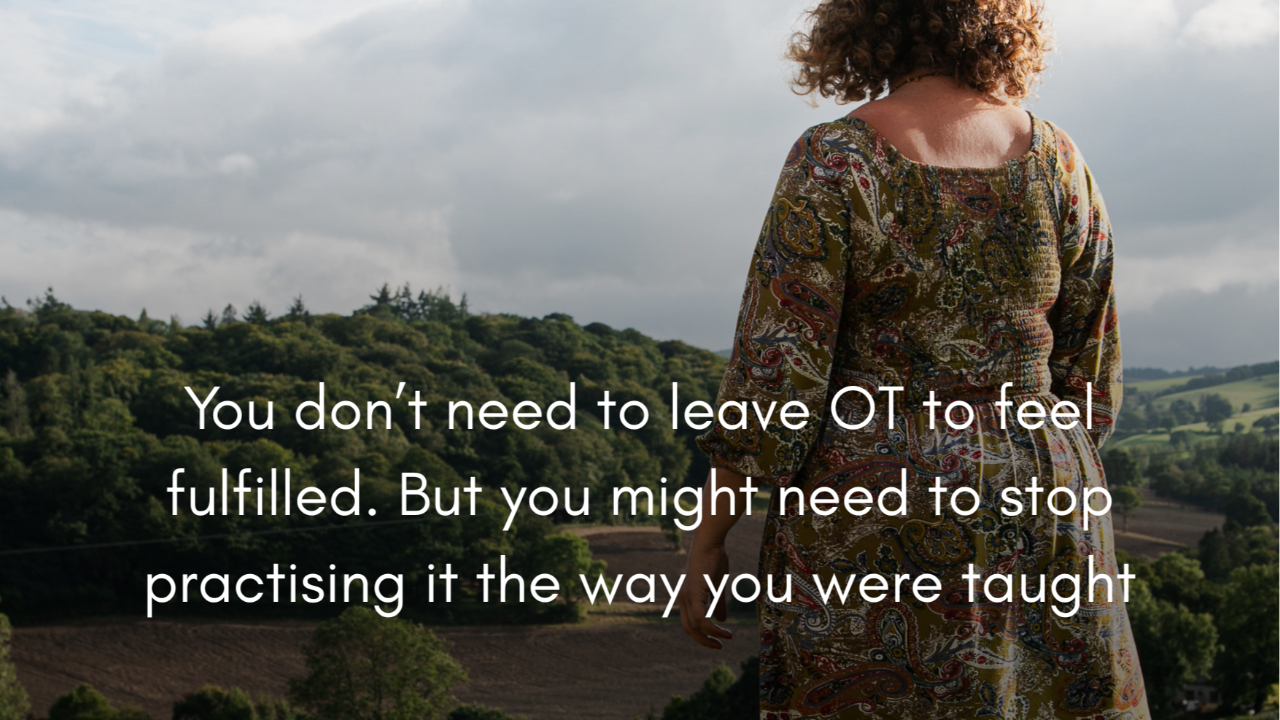
Many occupational therapists enter the profession with a deep sense of purpose. You likely didn’t spend years studying, completing placements, and building clinical skills simply to blend into the background. Most OTs begin their journey with a strong desire to make a meaningful difference.
Yet over time, the daily pressures of practice can blur that original vision. Caseloads, targets, policies, paperwork, and organisational systems can slowly pull your focus away from the bigger picture.
At some point, many occupational therapists pause and ask a powerful question:
What do I actually want to be known for as an occupational therapist?
This question goes beyond job titles, band levels, or professional credentials. It’s about identity, purpose, and the impact you want your work to have in the world.
Why Occupational Therapists Often Lose Sight of Their Bigger Vision
When you first discovered occupational therapy, something about it probably felt exciting or even transformative.
Perhaps it was the way OT looks at the whole person rather than just symptoms. Perhaps it was the ability to help people rebuild meaningful lives. Maybe it was the belief that occupation can truly change health and wellbeing.
However, real-world healthcare systems can make it difficult to hold onto that sense of purpose. Administrative demands, high caseloads, and rigid structures often leave little space for creativity or innovation.
Over time, many OTs begin to feel like they’ve lost a part of themselves.
But that original spark rarely disappears. It simply gets buried under the routine of day-to-day work.
The Unique Perspective Occupational Therapists Bring
Occupational therapists have a way of seeing patterns that others miss.
For example:
-
A teacher may see a “naughty child”, while an OT recognises sensory overload.
-
A doctor may see a “non-compliant patient”, while an OT recognises trauma or unmet needs.
-
A manager may see “low productivity”, while an OT sees burnout or poor occupational fit.
This ability to interpret behaviour through a deeper occupational lens is powerful.
Yet many OTs underestimate how valuable their knowledge really is. Because it feels natural to you, it can be easy to assume that everyone else understands these things too.
In reality, your professional insight is often a hidden skill set that the wider world desperately needs.
The Question That Can Transform Your Career
Instead of asking what job role you want next, it can be far more powerful to ask:
What problem do I care deeply about solving?
Many successful entrepreneurs and thought leaders share a common trait: they become obsessed with a problem.
They notice something in the world that frustrates them. A gap in services. A misunderstanding in society. A system that clearly isn’t working.
That persistent frustration can often become the foundation of meaningful work.
For occupational therapists, this passion frequently sits at the intersection of three things:
1. Your Clinical Expertise
Your training and professional experience give you a deep understanding of human behaviour, health, and participation.
Even if your career path has been broad rather than specialised, your OT foundation is incredibly powerful.
2. Your Personal Life Experiences
Your personal journey shapes the way you see the world.
Perhaps you’ve experienced:
-
burnout
-
neurodivergence
-
infertility
-
postnatal depression
-
caring for a family member with additional needs
-
navigating divorce or financial challenges
These experiences often provide insights that cannot be taught in textbooks.
3. The Issues That Quietly Frustrate You
What problems do you notice repeatedly?
What situations make you think:
“Why is nobody talking about this?”
This frustration is often a sign that you’ve identified an important gap.
When these three areas overlap, something powerful emerges: your unique perspective.
Your Lived Experience Is Not a Weakness
Many occupational therapists hesitate to speak about personal experiences because they worry it makes them less professional.
In reality, lived experience often strengthens your voice.
Some of the most impactful OT-led businesses and initiatives are built on personal insight. For example:
-
An OT who struggled with infertility creating programmes supporting women through matrescence
-
An OT who was a quiet child helping introverted professionals build visibility without burnout
-
An OT who experienced burnout mentoring clinicians to create more sustainable careers
These ideas are rarely invented from scratch. They are usually things that have been quietly developing in someone’s mind for years.
The Trap of Waiting Until You Feel “Ready”
One of the most common barriers occupational therapists face is the belief that they need more qualifications before they can step forward.
You might hear thoughts such as:
-
“I need another course first.”
-
“I’m not experienced enough yet.”
-
“I need to fix my own struggles before helping others.”
But perfection is not a requirement for making an impact.
Often the most powerful teachers are those who are simply a few steps ahead of the people they help.
Your curiosity, ongoing learning, and lived experience are often more valuable than another certificate.
Impact and Income Are Not Opposites
Another belief that holds many OTs back is the idea that caring deeply about people means you shouldn’t charge for your work.
But impact and income do not cancel each other out.
In fact, the more sustainable your work becomes financially, the more people you can ultimately support.
When you are working in an area that genuinely excites you:
-
your energy changes
-
your communication becomes clearer
-
your marketing becomes more authentic
-
the right people are naturally drawn to your message
Alignment creates momentum.
Building a Career That Reflects Who You Really Are
Imagine waking up each day knowing that your work is centred around the topic that excites you most.
Not because it appears on your rota, but because you chose it.
Today’s digital world has made it possible for occupational therapists to share ideas, teach, and lead conversations on a global scale. Social media, online education, workshops, and coaching programmes have opened entirely new pathways for OTs who want to expand their impact.
But stepping into that space requires courage.
No one will officially grant you permission to become a thought leader or to explore new ideas. That decision has to come from you.
Questions to Help You Find Your Unique Direction
If you’re unsure what you want to be known for, these questions can be a helpful starting point:
-
What first drew you to occupational therapy?
-
What topics do you find yourself talking about repeatedly?
-
What problems in healthcare or society frustrate you the most?
-
What personal experiences have shaped how you view the world?
-
What subjects do you enjoy researching even when nobody is paying you?
Very often, the answers are already present in your life.
You may simply not have claimed them yet.
The World Doesn’t Need More Identical OTs
The profession doesn’t need more occupational therapists trying to fit the same mould.
It needs individuals who are willing to bring their full story, perspective, and courage into their work.
Your experiences, your interests, and your frustrations all contain valuable data about the difference you could make.
When you begin following what genuinely excites you, opportunities often expand in ways you never expected.
Ready to Explore Your Next Step?
If you’re an occupational therapist who feels there might be something more for you beyond traditional practice, you don’t have to figure it out alone.
Beki Eakins works with OTs around the world to help them clarify their purpose, package their skills into meaningful offers, and create freedom-based online businesses that make a real impact.
If you’d like support exploring what you want to be known for — and how to turn that idea into something real — you can book a call with Beki to discuss your goals and see what’s possible.
Stay connected with news and updates!
Join our mailing list to receive the latest news and updates from Beki.
We hate SPAM. We will never sell your information, for any reason.