Building an Online Business for Occupational Therapists: Why Time and Location Freedom Come First
Oct 15, 2026
Imagine getting a phone call tomorrow morning telling you that someone you love is seriously ill on the other side of the world. What happens in the ten minutes after you hang up the phone?
If you are working in a traditional clinical role, your stomach probably drops twice: once for your family member, and a second time when you think about work. Before you can even look at flights, you have to work out who is managing the rota, how many days of annual leave or compassionate leave you might be allowed to take, and which overworked colleague is going to get landed with your caseload while you are away.
We go into healthcare because we care deeply about people. Yet the system we work in often stops us from caring for our own families when crisis hits. That exact contradiction is why building an online business for Occupational Therapists isn't about chasing a flashy lifestyle. It is about building a structure that lets you respond when your own life calls.
When Your Intuition Says Stay and the Rota Says Work
To explain why this matters so much to me, I have to tell you about two very different family crises.
Years ago, my ex-husband had a heart attack. It was deeply traumatic and threw our entire household into chaos. My children were visibly struggling, and every ounce of my maternal intuition told me they needed me at home. I wanted to be there for them.
However, my time belonged to a system, a manager, and a low OT wage. Every morning, I still had to get dressed, drop my crying children at childcare, and go to work. Knowing what your children need and being prevented from giving it to them by your job is a horrible feeling. Eventually, the pressure broke me and I ended up signed off sick for a long time. Even in the years before I finally left in 2020 (when my kids were 8 and 10), I spent so much of my time at home emotionally disconnected, operating like a machine with an endless list of clinical jobs running through my head.
Now contrast that with what happened just a few weeks ago.
I had recently flown back to North Wales after a month-long trip to Australia with my son and my parents. My parents had stayed out there for an extra few months, and out of nowhere, my mum became seriously ill. She walked into the emergency department and was told she couldn't leave without open heart surgery.
Waking up in the middle of the night in Wales, my intuition told me I needed to go back. After speaking with my partner, my ex-husband, and my kids (including my 16-year-old daughter, who proudly stepped up to help run the house and cook for her younger brother), I booked a ticket. Within five days, I was sitting next to my mum in Australia right before she was taken by air ambulance for her operation.
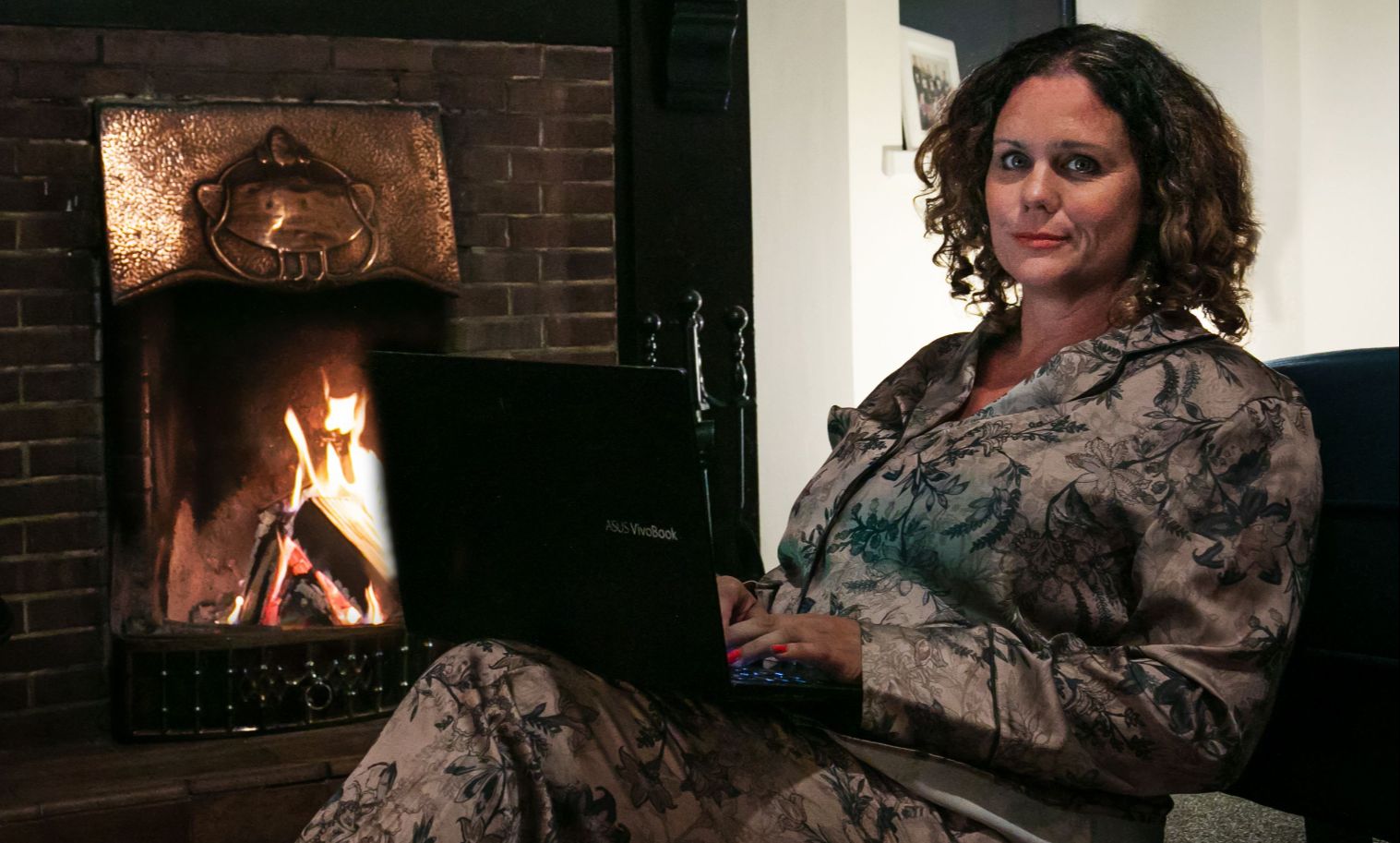
I didn't need a boss's permission. I didn't lose earnings, other than paying for the flights and hotels. Because I have a brilliant team supporting our clients, the business carried on while I travelled and recovered from jet lag. Taking only my laptop, I even signed up new clients from a sofa and a bed during breaks from hospital visits.
In both of those crises, I had the exact same heart and the exact same values. Only the working structure around me had changed.
The 100-Year-Old Factory Rule Running Clinical Diaries
Why do so many clinicians feel so trapped? A big part of the problem is that we treat the five-day, 40-hour working week as if it were set in stone.
In reality, the 40-hour week was popularised in 1926 by Henry Ford for his car factory workers. A full century later, Occupational Therapists, carers, and parents are still trying to force family illnesses and school runs into a timetable invented for manufacturing cars.
Research backs up just how damaging this lack of control is. In his book Drive, Daniel Pink examines decades of motivational research and points out that human autonomy relies on four pillars:
-
Control over your task
-
Control over your technique
-
Control over your team
-
Control over your time
As an OT, you might have some say over your clinical technique, but you have virtually zero control over your time when your diary is divided into 30, 45, or 60-minute slots for years on end.
When Australian palliative care worker Bronnie Ware compiled The Top Five Regrets of the Dying, the top two regrets were not living a life true to yourself, and working too hard—with countless people grieving the fact that they had missed their children's youth. When my kids were small, I simply wanted to work at 5am while they were asleep, or at 7pm after bedtime, so I could enjoy a sunny afternoon with them or cuddle on the sofa when it rained. On a standard contract, that level of responsiveness was out of reach.
The Unfiltered Truth About an Online Business for Occupational Therapists
Whenever people talk about working online, it is easy to assume they mean sitting by a pool doing nothing while money rolls in. Let’s drop the filter and look at the reality.
First, nobody is 100% free. As philosopher Isaiah Berlin explained in his 1958 Oxford lecture Two Concepts of Liberty, there is a difference between freedom from outside interference (which no human has, because responsibilities exist and parents get ill) and the freedom to be your own master and steer your own ship. Even in the darkest human circumstances, as Viktor Frankl wrote in Man's Search for Meaning, choosing how we respond matters deeply. Having your own business doesn't stop life from happening, it gives you the ability to steer your response.
Second, my business does not run completely without me, and I don't consider myself to have full financial freedom yet. I am building wealth much faster than I ever could on an NHS banding, I still work.
The crucial lesson here is that time and location freedom come before full financial freedom.
You don't need to wait until you are wealthy to claim your life back. For six years now, I have worked roughly 12 hours a week from a laptop. That structure gave me the financial independence to leave a marriage that wasn't working—something many people stay stuck in for years because they can't afford to leave. And right after that split, it allowed me to take my children to Australia for three months to heal away from painful memories.
Three Questions to Help You Get to "Free Enough"
You don't need total, fairytale freedom to change how you live. Being "free enough" changes everything. To see where you stand right now, sit with these three questions this week:
-
Is your life set up for an emergency? If a loved one needed you tomorrow on the other side of the country or the world, who would you have to ask, and how long would it take to get there?
-
Who controls your time in practice? Not on paper, in real life. Whose name is on your rota, and whose rules dictate when you are allowed to put your family first?
-
What is your first step towards "free enough"? Could one fraction of your expertise move online? Could you create a single offer deliverable from a laptop that buys you back one morning or one full day a week?
Someone designed the rigid clinical schedule you are currently working inside. By building an online business for Occupational Therapists, you can design a structure that puts your life and your family first.
If this article resonated with you, you can hear me talk through this entire experience on Episode 159 of the OT Yourself to Freedom podcast ("The OT Wage Kept Me Trapped. Time and Location Freedom Put Me Back in Control of My Family"), available now on all major podcast platforms.
Stay connected with news and updates!
Join our mailing list to receive the latest news and updates from Beki.
We hate SPAM. We will never sell your information, for any reason.